
Tokens of Ancient Athens
The Greek term for token is “symbolon,” “symbola” in plural. It means a token or sign that, when brought together with its counterpart, gains its full significance.
Symbolon is primarily an abstract concept, and any object can serve as a symbolon if it is mutually agreed upon. In Plato’s Symposium, in the context of each interlocutor offering his explanation of the nature of love, Aristophanes describes how humans were initially created with four legs and four arms, and how bipedal humans resulted from Zeus’ intervention. That is the explanation the comic playwright gives for the love one human has for another.
Each of us, then, is a tally of a human being, having been sliced like a flatfish, two from one; and each person is always searching for the tally that belongs to them (191d).
Literary texts and surviving artefacts demonstrate, that “symbola” served a complex range of purposes in public and private life, including establishing identity, proof of membership, acknowledgement of various agreements and services, as well as fulfilment of moral obligations. Their origins can be traced back to Neolithic societies in the Near and Middle East, where they were used for accounting communal goods and as precursors to writing.
The parable of Spartan Glaucus and the money deposited by a Milesian, as recounted by Herodotus, illustrates the moral and legal implications associated with tokens. Sophocles’ and Euripides’ texts highlight how tokens symbolise bonds between individuals and communities.
More on tokens in ancient Athens :
“Tokens in Classical Athens and Beyond”: Long Table Discussion 159, American Numismatic Society
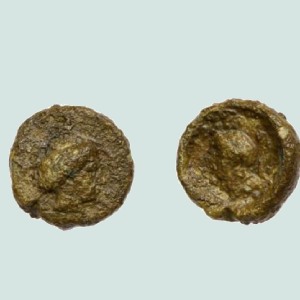
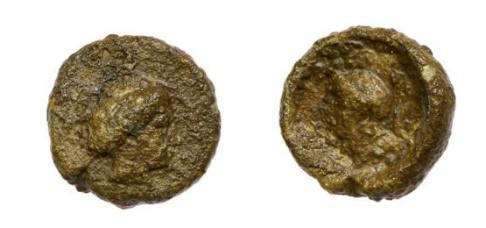
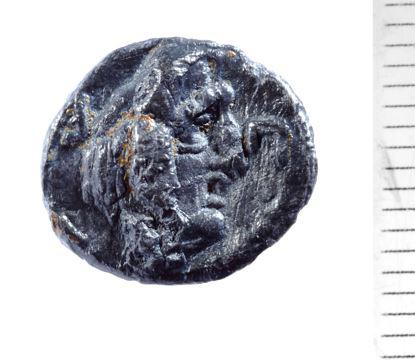
Perhaps the earliest extant lead token, dated to the first half of the fourth century BCE on account of excavation data.
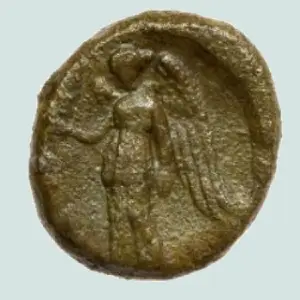
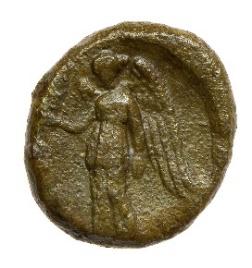
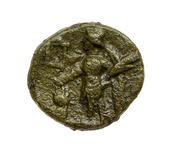
Nike is one of Athens’ official seal designs.
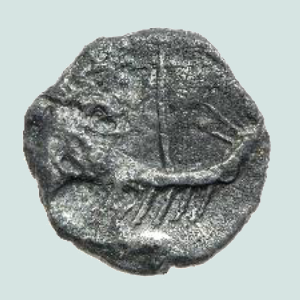
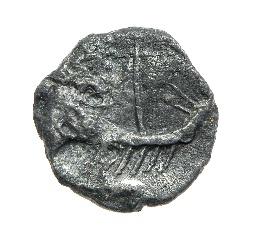
A ship on a lead token of unknown function.
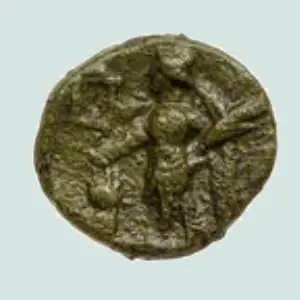
Voting procedure. Nike standing facing left, casting a ballot with extended right hand, palm branch in left arm.
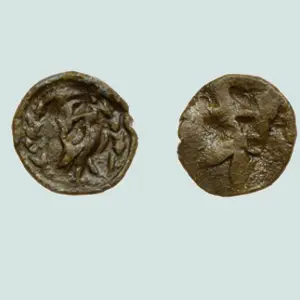
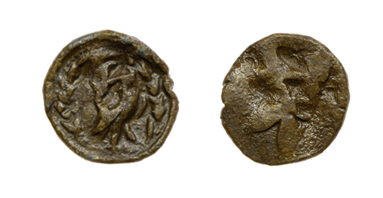
Lead token for public pay, found in the vicinity of the Council. Owl in wreath on face a, cicada on face b, incuse punches on both sides.
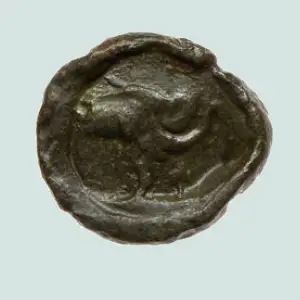
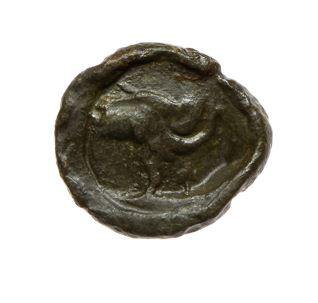
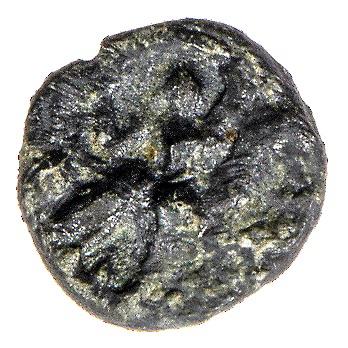
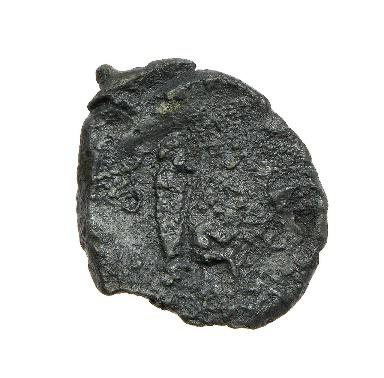
Tokens are essentially codes. Lead token with a clear but uncertain design
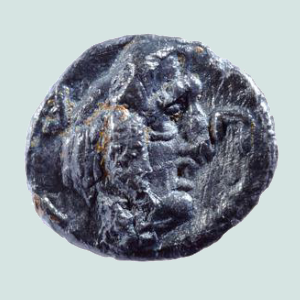
Lead token of pentedrachmia, meaning the sum of five drachms. These were state distributions in money and in kind. Theatre mask, inscribed ΠΕΝ (PEN).
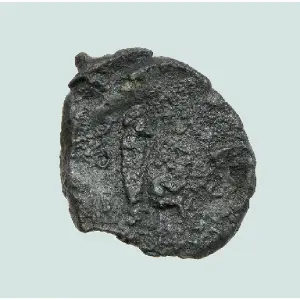
Lead token, the function/purpose of which is difficult to interpret. Herm with seated figure, both right.
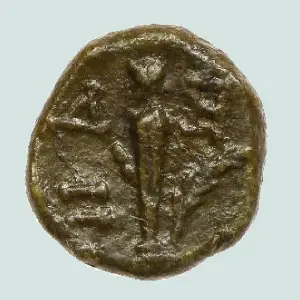
Lead token of the cult association worshipping Dexion. Sophocles was heroised as Dexion. Herm, left, with branch at lower right corner, letters in the other corners: Δ, E, Ξ. .
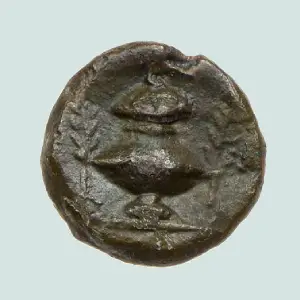
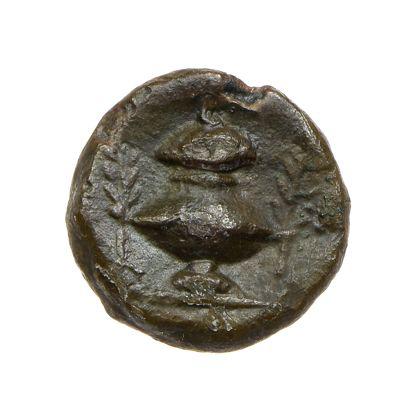
Token for the Eleusinian Festival. Kernos, the typical vessel of the Eleusinian Mysteries, counts among the official Athenian designs.
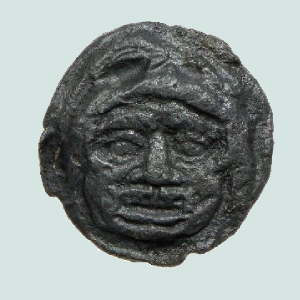
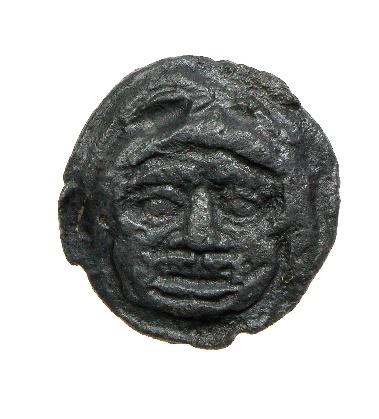
Token for public pay bearing gorgoneion. The gorgoneion is considered the hallmark of citizen identity.
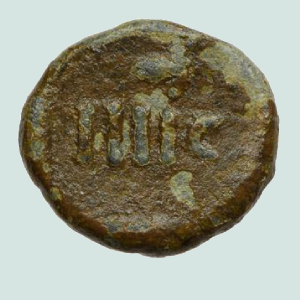
Lead token with the signs for four and half obols. It may have functioned as ‘house money’.
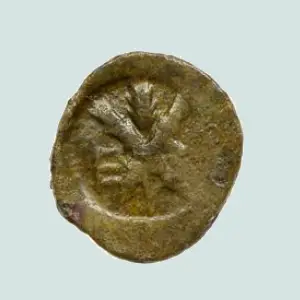
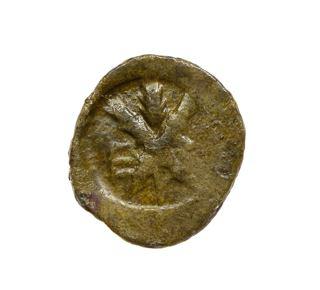
Lead token for grain distributions. Three ears of wheat crossed, Ε-Ρ.
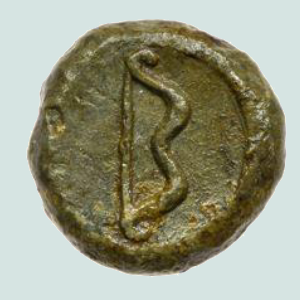
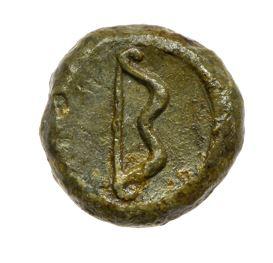
Lead token for some kind of public distribution. Strung bow.
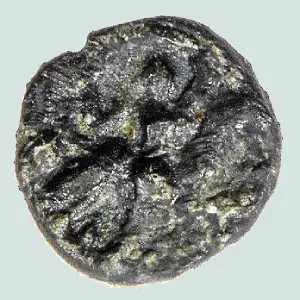
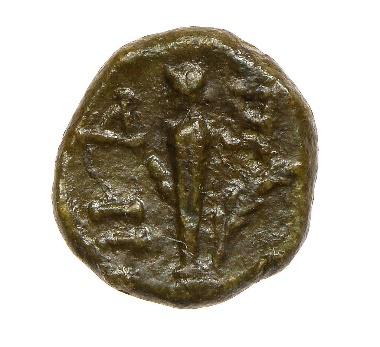
Lead token with Aphrodite Pandemos.
References:
Crisà, A., Gkikaki, M., and Rowan, C., eds. 2019 Tokens: Culture, Connections, Communities, Royal Numismatic Society Special Publication 57 (London: Royal Numismatic Society).
Gkikaki, M. 2020, ‘Tokens of Hellenistic Athens: Lead Tokens in the University Museum Göttingen, Part 1: The Haller von Hallerstein Collection and Other Greek Tokens with No Provenance Information’, Revue Suisse de Numismatique 98, pp. 91–138, pls. 13–15.
——. 2021, ‘Tokens for Festivals in Hellenistic Athens’, in A. Crisà, ed., Tokens, Value and Identity: Exploring Monetiform Objects in Antiquity and the Middle Ages (Brussels: Centre d’études numismatiques), pp. 55–74.
——. 2022, ‘Athenian Lead Tokens: Thoughts on their Imagery and Function Occasioned by the Rediscovery of Part of the Alexandros N. Meletopoulos Collection’, Numismatic Chronicle 182, pp. 1–32.
——. 2023, ‘Tokens from Roman Imperial Athens: The Power of Cultural Memory’, in Z. Newby, ed., The Material Dynamics of Festivals in the Graeco-Roman East (Oxford: Oxford University Press), pp. 95–136.
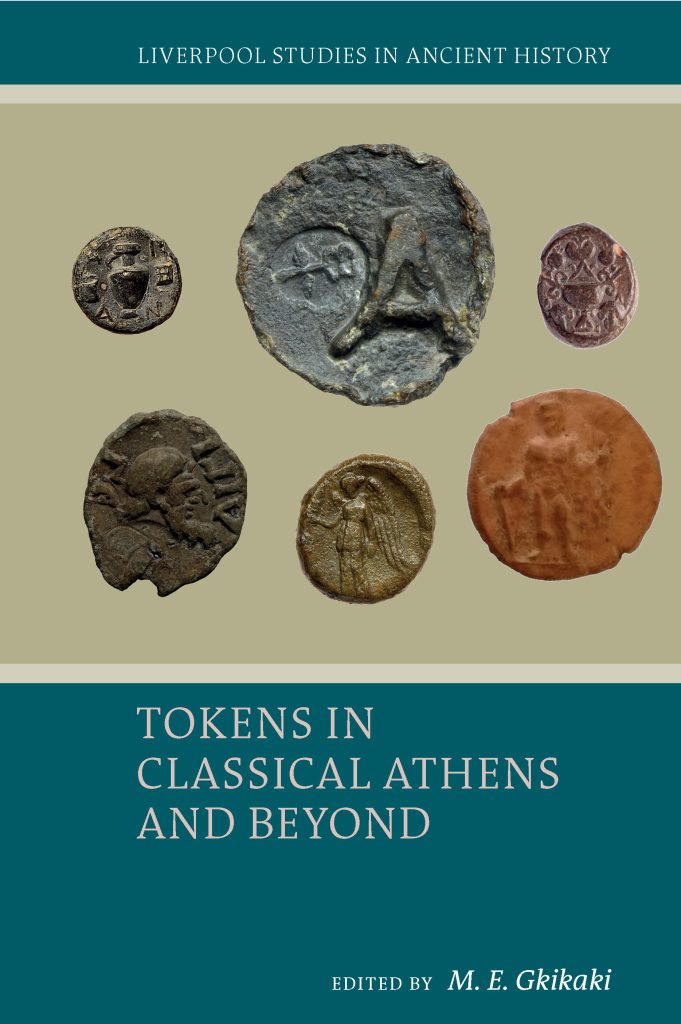
Gkikaki, M.E. ed., 2023. Tokens in Classical Athens and Beyond (Liverpool: Liverpool University Press).
——. forthcoming, Tokens of Ancient Athens. Politics, Communities, Contexts (Liverpool: Liverpool University Press).
Images: ASCSA: Agora Excavations. Photos: M.E. Gkikaki and Giannis Tzitzas © Hellenic Ministry of Culture/Hellenic Organization of Cultural Resources Development (H.O. C. R. E. D.)
About

Mairi E. Gkikaki is a classical archaeologist and a numismatist. She is an Honorary Research Fellow at the University of Warwick. Research on Athenian tokens was made possible by the project “TokAthe: Tokens and their Cultural Biography in Athens from the Classical Age to the end of Antiquity’ carried out at the University of Warwick (2018-21), a Marie Sklodowska Curie Action funded by the European Union’s Horizon 2020 research and innovation programme, grant agreement No. 794080. Also, by the project “Token Communities in the Ancient Mediterranean”, a five-year project that has received funding from the European Research Council (ERC) under the European Union’s Horizon 2020 research and innovation programme under grant agreement No 678042.
Images: ASCSA: Agora Excavations. Photos: M.E. Gkikaki and Giannis Tzitzas © Hellenic Ministry of Culture/Hellenic Organization of Cultural Resources Development (H.O. C. R. E. D.)
© 2026 Tokens of ancient Athens